Address visibly
Keep cabinet coordinates and port loads aligned with the approved screen drawing.

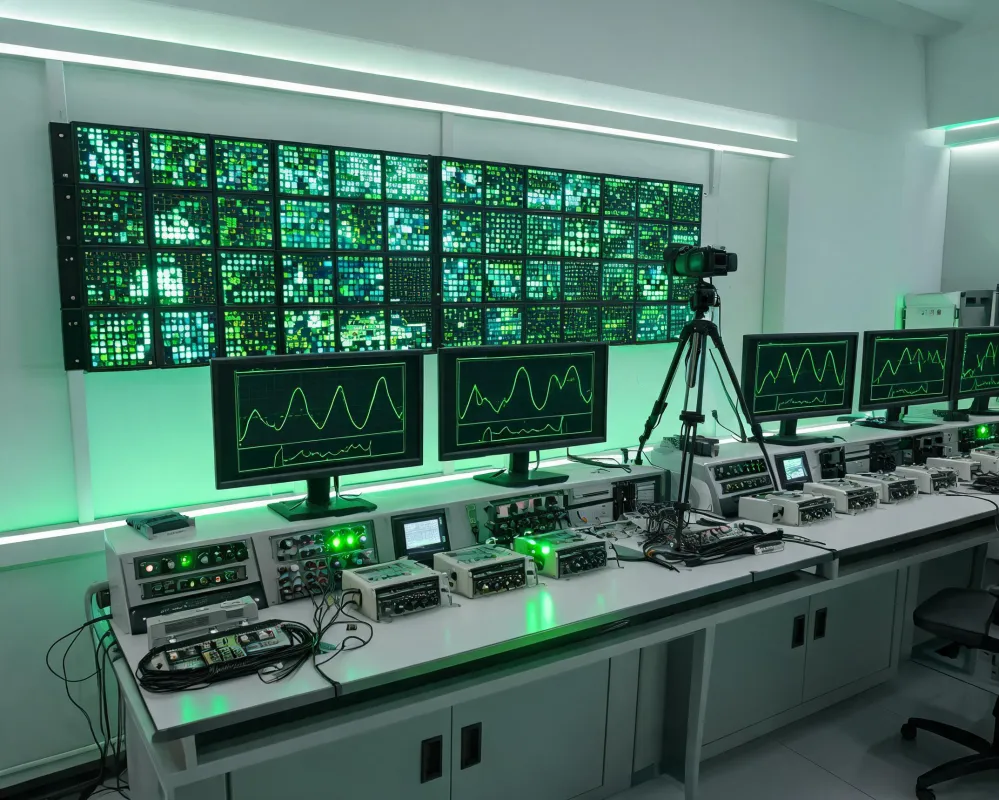
LED control work is easy to describe as a box between source and screen. In practice, the result depends on a chain of mapped decisions: timing, scaling, receiver allocation, firmware, optical calibration, redundancy and operator recovery. This site treats those records as the center of the story.
We do not invent a founder biography or an installation count that is absent from the supplied brand assets. The verifiable narrative is the engineering sequence itself. A project team receives a target canvas and a set of sources. It then has to resolve where scaling occurs, how pixels are assigned, which files control receiving hardware, and what the venue will call an acceptable interruption.
The next phase moves from logic to light. After physical alignment and electrical checks, the team establishes a warm-up condition, selects measurement points, records brightness and white-balance targets, and checks low-gray transitions with content that resembles real use. Any value on this site is therefore an acceptance-planning example unless a selected model sheet or signed project record supports it.
Finally, the project becomes an operating system rather than a demonstration. Approved configuration files, firmware identifiers, cabling records, spare paths and escalation contacts are stored together. That package is what allows another technician to return months later and distinguish a new fault from the original baseline.
“A visible image is the beginning of commissioning, not the evidence that commissioning is complete.”NovaStar project-method statement · no named-customer claim
Keep cabinet coordinates and port loads aligned with the approved screen drawing.
Record content, temperature, measurement position and operating level with each result.
Model, firmware, receiving hardware, ambient light and camera settings can change the outcome.
Maintain known-good files and rehearse the steps that return the system to service.

A control system becomes maintainable when its knowledge is not trapped with one programmer. Project records should let operators identify approved presets, understand alarm boundaries and escalate with useful evidence. Service technicians need cabinet maps, known-good files and an explanation of what changed. AV consultants need acceptance criteria that can be repeated rather than subjective phrases such as “looks even.”
This approach has limits. Training does not authorize unsafe electrical work, a saved configuration cannot compensate for incompatible hardware, and a sample cabinet cannot predict every thermal or optical condition on a full wall. The project team must verify the selected models, regional requirements and installation environment. Clear boundaries make the handover more useful, not less ambitious.
Share the present canvas, sources, receiving path, firmware record and known limitation. The response can focus on missing evidence rather than promotional assumptions.